
Swimming Pool Rust Repairs
Rust in a swimming pool is a sign of corroding steel reinforcement. Left untreated, it can cause serious structural damage. Local Pool Renovations provides expert rust repair services for concrete pools across Melbourne.
Swimming Pool Rust
Swimming Pool Rust Repairs in Melbourne
Pool rust repair is specialised work. You need someone who understands the concrete shell, pipe runs and rebar layout in order to not cut through anything important, this is where contacting us can save you from more problems.
Call: 0407 666 999 to get it fixed the right way.
Rust spots in swimming pools.
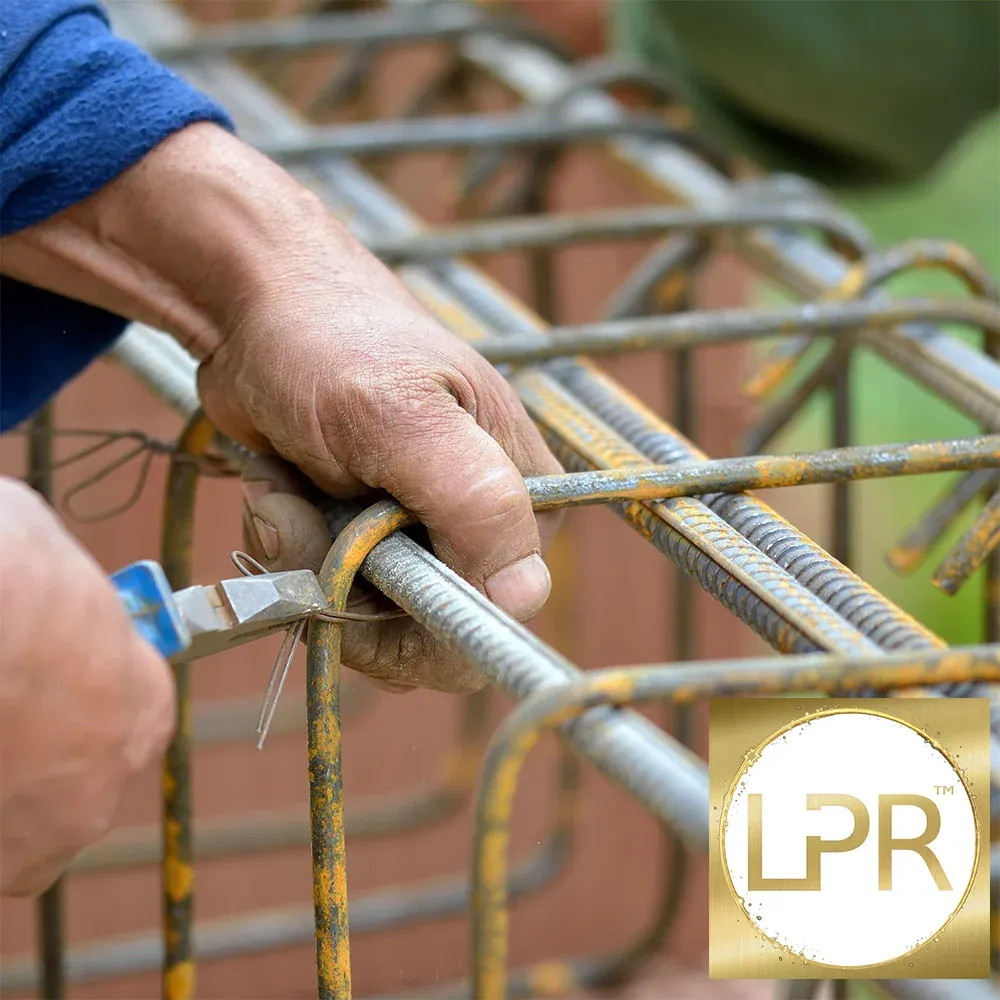
Concrete swimming pools are built with a combination of reinforcement bars and concrete, the steel reinforcement bars are tied together with steel cable ties. There are also other parts within the pool that are made of metal, this could be the screws for the pool lights, stainless steel ladders, the bolts that hold the pool ladder together, screws that connect the pool fittings together like suction covers & the main-drain of the pool. As you can see, there are lots of bits and pieces that might have steel under the swimming pool water. Problem is, sometimes over the years some pool owners DIY or other tradies may have used steel that was not stainless, or not the right type of grade. Though most times, rust problems in swimming pool are due the reinforcement bars or the cable ties are too close to the pool surface.
Rust spots
Rust spots tend to be bigger beneath the surface. In this image, the pool render was removed exposing the rusted cable ties that were causing a rust stain, the original rust stain was around 20mm showing on the pool surface. The concrete was cut open, the steel cables ties removed, all rusted concrete was also removed before filling in with an epoxy filler and re-rendered.
Rusted reinforcement bars
When reinforcement bars rust in a swimming pool, the rust tends to spread along the length of the bar, so it is important to repair the rust spots as soon as they are noticed to avoid issue spreading onto other bars and coming through more areas of the surface.
Reinforcement bars too close to the edge of the concrete
When reinforcement bars are placed too close to the edge of the concrete, they are significantly more prone to rusting. In the example shown above, the steel bar was positioned just 20mm from the concrete surface and you can see a green / black stain developing, — 20mm is far too shallow for long-term durability. In swimming pool environments, this issue is especially common due to constant exposure to salt or chlorinated water. To prevent corrosion, reinforcement bars should generally be embedded at least 75mm deep within the concrete.
Black, Green & Brown stain in swimming pool
The most effective solution is usually to remove the rusted steel bars entirely—often tracing them until all signs of oxidation are eliminated. After removal, there may be residual liquid rust trapped within the concrete. This is often caused by air pockets that have filled with pool water, allowing the rust to dissolve and form a corrosive mixture of steel residue and chlorinated water—a toxic slurry that must be thoroughly cleaned out before repairs can proceed.
How rust can affect a swimming pool & our health.
Toxicity Level: To humans: Not dangerously toxic in small accidental contact, but can irritate skin, eyes, and lungs (especially if aerosolized or disturbed). Avoid touching or breathing it in, and wear gloves/mask during removal. To pool users: If the contaminated concrete leaks into the pool, it can affect water chemistry, causing: pH imbalances Increased metal content Irritation to skin and eyes To concrete structure: It’s chemically aggressive, accelerating rebar corrosion and undermining structural integrity. Bottom Line: While not acutely toxic like a poison, the mixture is a corrosive and harmful byproduct that poses health and structural risks, especially if left untreated in a swimming pool setting. Use caution, proper PPE, and thoroughly clean and neutralize affected areas before repair.
What causes rust in swimming pools?
Rust forms when metal in or around the pool corrodes—an electrochemical reaction between the metal, water, dissolved oxygen, and pool chemicals. The by-product is iron oxide (rust), and if reinforcement steel is involved, the concrete shell can be compromised. In most cases, rust forms in swimming pools becuase of Salt, Chlorine & oxygen, not all in combination but because of any one of these things.
Chemical Drivers
Chlorine (sanitiser): Continuous exposure to chlorinated water accelerates metal oxidation.
-
Chloramines: Formed when chlorine reacts with organics (sweat, urine, debris); these compounds are more corrosive than free chlorine. Chloramines: Formed when chlorine reacts with organics (sweat, urine, debris); these compounds are more corrosive than free chlorine.
-
Improper water balance: Incorrect pH, alkalinity, or sanitizer levels increase corrosion rates. Improper water balance: Incorrect pH, alkalinity, or sanitizer levels increase corrosion rates.
-
Galvanic corrosion: Dissimilar metals in electrical contact within conductive pool water cause the less noble metal to corrode. Galvanic corrosion: Dissimilar metals in electrical contact within conductive pool water cause the less noble metal to corrode.
-
Crevice corrosion: Stagnant, chlorinated water trapped in gaskets, joints, or tight gaps creates micro-environments that aggressively attack metal. Crevice corrosion: Stagnant, chlorinated water trapped in gaskets, joints, or tight gaps creates micro-environments that aggressively attack metal.
-
Foreign metal objects: Hairpins, coins, screws, or tools left in the pool can rust and stain surfaces. Foreign metal objects: Hairpins, coins, screws, or tools left in the pool can rust and stain surfaces.
-
Exposed reinforcement steel: Cracks or penetrations that reveal rebar allow moisture and chemicals to reach and corrode it, leading to rust bleed-through. Exposed reinforcement steel: Cracks or penetrations that reveal rebar allow moisture and chemicals to reach and corrode it, leading to rust bleed-through.
-
Poor ventilation (indoor pools): High humidity and chloramine-laden air corrode metal fixtures, fittings, and plant equipment. Poor ventilation (indoor pools): High humidity and chloramine-laden air corrode metal fixtures, fittings, and plant equipment.
-
Surface corrosion / staining: Visible brown or orange marks where metal has oxidised on or near the finish. Surface corrosion / staining: Visible brown or orange marks where metal has oxidised on or near the finish.
-
Galvanic corrosion: Accelerated attack on the less noble metal in a mixed-metal pair. Galvanic corrosion: Accelerated attack on the less noble metal in a mixed-metal pair.
-
Crevice corrosion: Localised pitting or attack in shielded zones with different water chemistry. Crevice corrosion: Localised pitting or attack in shielded zones with different water chemistry.
In summary: Pool rust is corrosion driven by chemistry (chlorine, chloramines, unbalanced water), metal interactions (galvanic and crevice effects), and practical issues (loose metal objects, exposed steel, inadequate ventilation). Controlling water balance, isolating dissimilar metals, and maintaining good housekeeping and airflow greatly reduces the risk.
Ready to Transform Your Pool?
Call or text Andrew for a free quote. No obligation, straight advice.